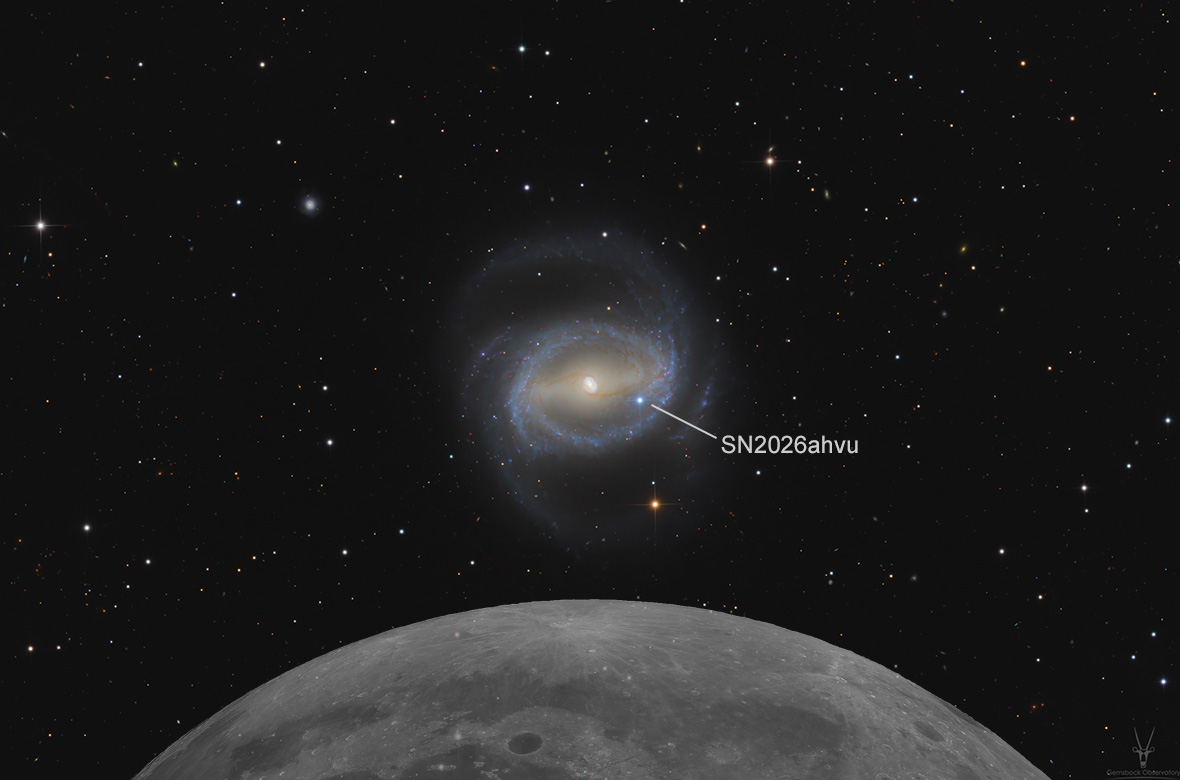
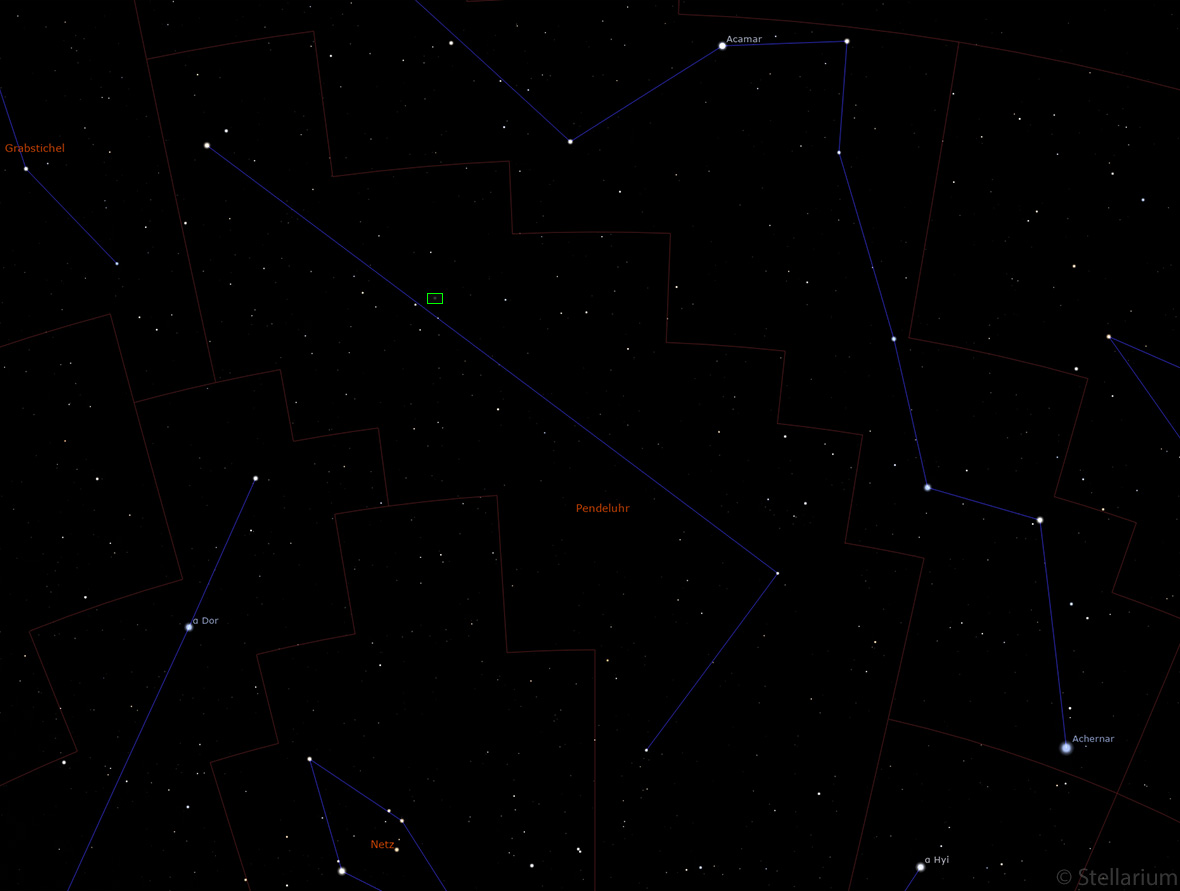
Galaxy NGC 1433 with Supernova SN2026ahvu in the constellation Horologium
NGC 1433 is a barred spiral galaxy in the constellation Horologium (the Clock). It is located about 50 million light-years away. On November 2, 2026, the ATLAS project discovered a Type Ia supernova in the galaxy, designated SN 2026ahvu.
A Type Ia supernova originates from a white dwarf, the dense remnant of a Sun-like star. Models suggest two possible paths leading to the explosion. In one, the white dwarf in a binary star system accretes matter from its companion. In the other, two white dwarfs merge. It remains unclear which path led to SN 2026ahvu.
If the dwarf star exceeds a certain mass limit, carbon-oxygen fusion begins inside it. The classic limit is about 1.4 solar masses (the Chandrasekhar limit). The explosion completely tears the star apart.
This process produces radioactive nickel-56. It decays into cobalt-56, which in turn decays into iron-56. Their half-lives are approximately 6 and 77 days, respectively. This decay drives the luminosity and determines the light curve over weeks and months.
I took this photo on November 15. At that time, the brightness was likely still increasing. NOIRLab expects the peak to occur between November 18 and 23. (https://arxiv.org/html/2611.09875v1).
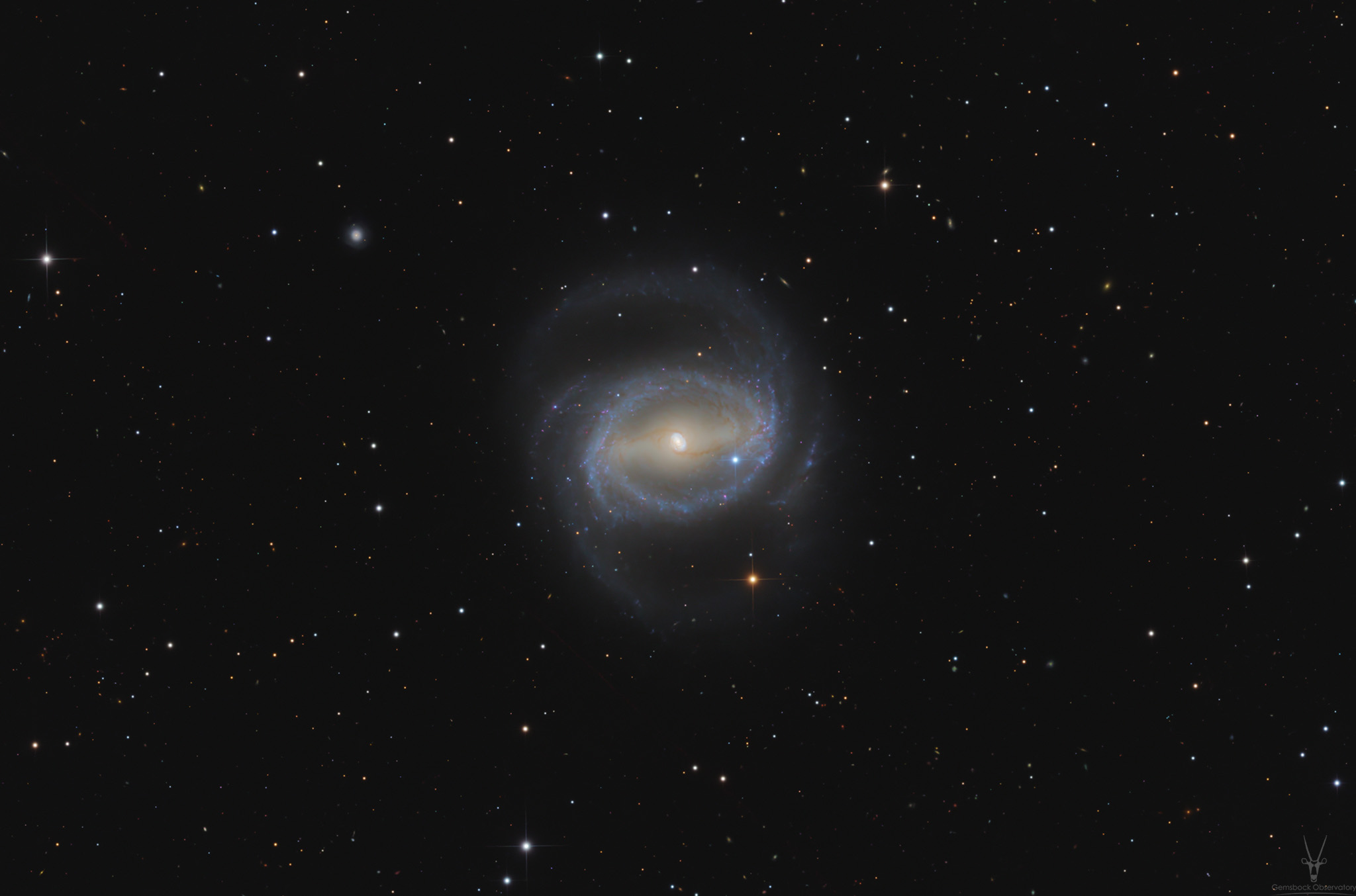
| Date: | 15.11.2026 |
| Optics: | Planewave CDK 14 with Televue 0.8x reducer |
| Aperture: | 350 mm |
| Focal Length: | 2050 mm |
| Camera: | QHY268M |
| Exposure: | R:G:B 14:12:12 x 600 s |
| Location: | Gemsbock Observatory, Rooisand Desert Ranch, Namibia |
| Processing: | PixInsight, Photoshop |
| Diameter: | 85,000 light years |
| Distance: | 50 million light years |